Love, Laughter, and a Touch of Magic: Why I Write Romcoms

When I first became a published poet, I never imagined I’d end up writing romantic comedies. But somehow, poetry led me to screenplay writing, and that led me to prose, and prose led me to falling head over heels… for writing stories about people who fall head over heels.

These days, my romcoms explore all kinds of love: contemporary stories grounded in real-life awkwardness and joy, and magical ones where enchantment sneaks into everyday life.

What do they all share?

✨ Swoonworthy heroes who make your heart skip.

✨ Feisty heroines who say what they mean and know how to kick some serious butt

✨ And love that shows up in the oddest circumstances: free round-the-world plane tickets, accidental double bookings, piglets leaping out of transport trucks, surprise leaps back in time.

I write romance with main characters in their late 20s to early 40s, because that’s when many of us are still figuring ourselves out. I want to remind readers that love doesn’t have a timeline.

Love just happens, usually when you least expect it, and more often than not, it arrives with a touch of comedy, like a wink from the universe.

And yes, there’s still poetry. I can’t help myself. It’s tucked into the rhythm of my sentences, the way my characters see the world, shaping my metaphors, the rhythm of my prose and the way my characters speak and feel.

But through it all, there’s been a constant magic: you.

To my WordPress family, my Goodreads friends, my Insta family, my Facebook readers, and the Threaders I chat with on a daily basis—thank you!

Your comments, reviews, DMs, email notes, and hugs (so glad we can do that again!) at book events make this writing life feel less like a job and more like a shared adventure.

You cheer me on when finding the right words feels tricky, and you celebrate with me when the characters finally kiss (or leap back in time!).

I write these books to make you laugh, swoon, and help you to believe that love can crash into your life in the oddest—and most wonderful—ways.

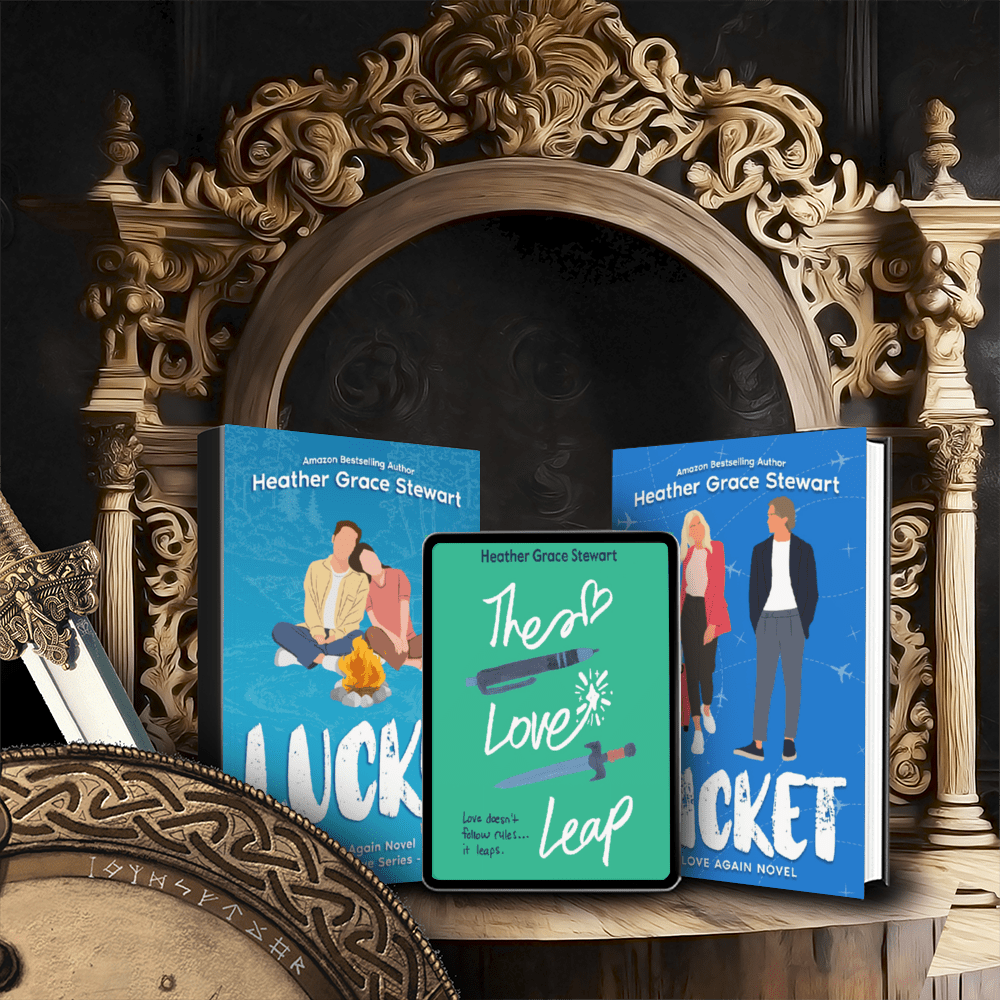
So if you’ve ever picked up The Ticket, Good Nights, Lauren from Last Night, Lucky, The Love Leap, or any of my other books, this is a hug from me to you.

With love and gratitude,

Heather 💖

How I Curbed My Cellphone Addiction

I’m Heather, a novelist, mother, and one-time cell phone addict. The addiction lead to wrist pain and mild depression. Here’s how I snapped out of it, and how you can, too.

It’s not easy to admit this, but for two years, I was addicted to checking my cell phone for new texts or social media posts almost every half hour.

It turns out I’m not alone in this addiction. According to the latest International Data Corporation (IDC) data, 79% of adult smartphone users have their phones with them for 22 hours a day, and 80% of users check their phones within 15 minutes of waking up every day.

My reasons for falling into the addiction were simple. I work from home, and had my phone in front of me at my computer between 8:30 a.m. and 5:30 p.m. in case I got an urgent text or call from my teenage daughter or husband, or a family member in need.

As a novelist I have a set writing schedule. I usually write in the morning for four hours. I work with short breaks, getting up every now and then to stretch or pour myself a coffee. Since I manage to get books written and published on time and market them, and have done so for five years, I didn’t think I was the type to get addicted to social media, or at least, the act of checking social media for any new activity. Since I got my new phone in 2016, I have spent about a half hour every evening interacting on social media, and I was happy with that limit.

I didn’t realize I was going over that limit. A washroom break would lead to fifteen minutes on the phone. A quick check to see if “anything interesting” was happening with my friends on Twitter became a half hour trapped inside the Twittersphere. I would joke about cooking dinner while on Twitter — and burning it. My kid and husband were happy, and I was a successful author. I was managing to balance everything just fine. I didn’t think it was interfering with my life in a negative way.

It wasn’t until Apple introduced their new Screen Time feature in iOS 12 in the fall of 2018, and then Instagram added it to their app in 2019 that I started using the features and realizing just how many hours I spent on my phone.

It wasn’t until Apple introduced their new Screen Time feature in iOS 12 in the fall of 2018, and then Instagram added Your Activity to their app in 2019 that I started using the features and realizing just how many hours I spent on my phone. My phone screen time each day was four to five hours, and at my height of trying to gain new readers on Instagram, I was using Instagram for an hour a day!

Before I go into why I didn’t want to spend that much time on social media, let me say that I enjoy social media for both work and play. I have come to love many people I’ve met online; some have even become friends I’ve met in real life.

However, being on social media can be draining. It’s like being in a bar; sure, you can meet some cool new friends, but you also can’t control who’s going to come up to you, spill a drink on you and say something nasty. There’s also the whole “Look At My Amazing Life’ aspect of social media. To each their own, but after 10 years using social media for both work and pleasure, I’m moving into the phase of Living My Amazing Life instead of posting about it. I’m still using social media, but I’m vigilant about how I’m using it. I told a friend the other day that I try to make sure my posts educate, entertain or inspire. If what I’m about to post doesn’t do one of those three things, I stop posting.

When I think back to when I was at my happiest in life, it was when I was climbing the pine tree at the back of our cottage to spend time alone up in my tree fort. I’d chew Hubba Bubba gum and read Archie comics and write stories and poems. I’d look out at the lake and commune with nature. I then climbed down and went for a swim with my sister, or had a great conversation with my parents. I was most happy at about eleven years old, when cell phones didn’t exist.

IMG_1698

There are so many trees to climb! ~Author Heather Grace Stewart

In early March while on vacation, I caught myself checking my phone several times in an hour, and I just got fed up with myself. Why couldn’t I focus on the moment I was living right then — a special family time — instead of what other people were doing? I wanted to find a way to feel eleven again, and I had a feeling it was just within my reach. I knew that if I wanted something to change, I had to make a drastic change. I unplugged from social media by taking every single social media app off my phone. When we got home, I started putting the phone in its charger in the kitchen, where I could still hear it if it rang, instead of in front of me at my desk.

On day one, I kept a journal of how I was feeling. It made me sick to my stomach to learn I was wanting to check my phone. I felt out of the loop. I felt disconnected. I felt angry that not using social media made me feel that way.

By the end of day two, however, I was feeling a sense of relief. I couldn’t believe how much more free time I had! By the end of March, I had finished my fifth novel and sent it to my agent.

After a month of using social media only on my desktop and only at a specific time each afternoon, I began to realize which app I loved the most (as Marie Kondo says, does it spark joy?) and decided to put Instagram back on my phone, but I allowed myself only 15 minutes a day with their Your Activity feature. My phone Screen Time is now down to 30 minutes a day, but that includes texting and calls and email for my work.

The change was like a light switched on in my life; one I hadn’t even realized had been off.

The change was like a light switched on in my life; one I hadn’t even realized had been off. It did take a few weeks, but I noticed that good friends began texting me or even (gasp!) calling more to catch up, instead of hearting my posts on Facebook, Twitter or Instagram. I had so much more free time, I was able to take up hot yoga, and that in itself has been life-altering. I’m spending more time cooking and enjoying it; I’m going for walks and spending quiet time just watching the birds in the new feeder in our backyard. I never bring my phone to the breakfast or dinner table anymore. My husband and daughter don’t either. The other night, we shared a big bag of Hubba Bubba gum while watching AGT together and pausing the show to tell each other stories. Then my husband pointed out we had a visitor, and together, we watched a skunk dig for grubs for fifteen minutes in our yard. We marveled at his technique and worried where our old cat was at the time. We put bets on whether he’d get skunked or not (he didn’t — he was happily asleep on a comfy chair on our front porch). To me, that time together was more interesting and weirdly bonding than anything I’ve seen on social media this year.

I still check the desktop versions of a few social media apps once every 24 hours for business purposes, but there’s no “crazy itch” to do so. It can wait.

I have so many trees to climb.

Back To You

Hey.

I know it’s been a while. I hope you still remember my name.

I’ve been a terrible blogger for the last few years. It’s been challenging to find time to write my novels, market my novels, teach others how to do that via YouTube and social media, and spend time with my family. Blogging had to be left behind.

But blogging poems and blogging about writing are how I got pulled away from journalism and onto this career path back in 2007. I started this blog as “Where the Butterflies Go,” you all commented on my poetry, encouraged me to turn the posts into a book, and … […]<<< a whole lot of stuff happened! and here I am today, a published author, with four novels, five poetry books, a screenplay book and a kids’ book of poems under her belt. I never could have imagined I’d still be doing this more than a decade later.

I don’t think I’d be here if I hadn’t started that blog and had such great feedback from you readers. Thank you.

I miss that interaction, don’t you? Social media certainly makes it easier to comment (no logging in…I’ll see what I can do about that btw) but you don’t always have the same “clan” coming back. I miss my bloggyland tribe.

I’ve learned so much since my first novel was published. Here are a few of those lessons:

1) Take risks. If you don’t risk, you don’t grow. I know it’s scary, especially for so many of us introverted artist types (surprise, yes, I’m in fact an introvert who had to come out of her shell through drama as a teenager when she realized that’s how artists grow). I have had such an interesting life because of a few brave moments.

2) You have to put yourself out there as an author. No one else, not even your publicist, knows your product like you do. You have to go to the book signings and the speaking engagements, tweet about stuff that really matters to you, and risk looking like a fool (see #1) if you want the right readers to find you. In time, many of those readers will become your friends. Cool right? It’s not all about making money…but…

3) You have to spend money to make money. I didn’t like this one very much. You mean you have to spend money to advertise that your heart and soul of a book is FREE for a few days? Yes, you do. You don’t have to do that until the end of time. Just until you gain a reader base. It sounds wrong, but it’s right. I didn’t start making a profit as an author until I started spending money directing traffic to my books.

4) Give back. I feel this one strongly. I like to encourage and teach aspiring authors, because I remember how maddening it can be to feel like you’re getting absolutely nowhere. I still have those days, trust me, but that’s because I’m trying new things every day (audiobooks, TV deals) so I’m still learning what works and what doesn’t work. There are tens of thousands of new authors out there who are struggling to find their audience in this ever-changing book industry. I just want to encourage them before they decide to call it quits. Speaking of calling it quits…

5) Don’t quit. Success if probably just around the corner, or at least the corner after that. Keep on going, dreaming, risking, believing. Don’t put a second mortgage on your home, mind you, please be smart about it, but do everything you can to get your book seen. You have to keep on going, especially if you have a strong “knowing” about it. If you know it’s supposed to be, it will be. It’s just a matter of time.

I’m so happy to be back. I’ll try to do this weekly!

Heather 🙂


Home Again, Naturally.

I’m happy to be back home with one of my best furry feline friends, Sam, 171/2. This photo was taken late last night after a long day flying home. My arms are sore 😉
Today, I’ve been writing down my main goals for the year, and at this point, I have some (potentially?) bad news. Not one of them is a new book. I always listen to my gut, and I just don’t feel that I have anything important to say in book form right now. I’ve been writing and plotting but nothing feels “just right” to move forward with yet.
I’ve said all that matters to me for now in CAGED, and in my three romantic comedy novels, and earlier, in my four poetry collections.
That said, I think that by now, you know I often surprise myself. I didn’t think I’d be publishing one book in 2016, let alone two!
This year, I want to focus on learning to market the works that I do have out, with the help of an indie publishing guru, Mark Dawson, with whom I’ve been training thanks to his Self Publishing Genius course – I highly recommend this course!
My novels are selling very well, but I wish more people knew about my poetry. I’m going to focus on improving my marketing skills this year, become a yoga practicing intermediate, and above all, spend more time with/writing to the old fashioned way! family and good friends.
Will I write? Of course I will. I just can’t set a timeline for when the sequel to The Ticket will be out – or even if there will be one.
It’s a blessing and a curse that I always write what I want – not what’s in demand 😉 I hope those of you who have been following me for a while will stick around and check in on me every now and then.
I do know something good is just around the corner. I’ll keep you posted.
Have a wonderful start to 2017! Be good to one another.

Love, Heather
xox

fullsizeoutput_fb11

An Interview with Heather Grace Stewart


Leap, from the author of Where the Butterflies Go, is available for purchase at Lulu.com and Amazon stores worldwide.
It’s also available on Kindle, Kobo, iBooks, and where all fine ebooks are sold. You can also order an autographed copy via Paypal. Contact the author at writer@hgrace.com. Half the proceeds from sales go to Hearts for Change – an Educational Project for orphaned children in Kenya.


Here’s an interview with the author from 2010:

Questions for a Poet, As Put to Seamus Heaney

Q: Some years ago, Seamus Heaney told an English journalist: “My notion was always that, if the poems were good, they would force their way through.” Is this now your experience?

HGS: Absolutely. Sometimes it comes through in a matter of minutes; other times, I write down a few lines, and the rest follows maybe a day or a few weeks later. But if it’s good, it all ends up on the page…and then typed into a document in my “Poetry in the works” file on my computer, and then, if I still like it after I’ve lived with it a couple weeks, I put it into a “Poetry to publish” file.

Q: Over the years, Heaney often quoted Keats’s observation, “If poetry comes not as naturally as leaves to a tree, it had better not come at all.” Is that just a young poet’s perspective?

HGS: I think so. It doesn’t always come naturally to me. Sometimes I just need to sit down and force myself to write. Stop listening to the whining voice; shut it out, and just “do it.”

Q: Does this mean that a poem essentially begins for you when you find a form?

HGS: A poem essentially begins for me when I’ve found my voice for it; the form takes shape with the voice.

Q: Is there a poetry time of day and a prose time of day?

HGS: Used to be I used my early mornings for poetry and at sunset, and prose anytime, but now that I am a mother, it’s when I have a notepad, pen, and that spare minute when I’m not being asked to wipe a bum or put Barbie’s head back on.

Q: I remember Anne Yeats saying that her father mumbled to himself when he started to write. Would the Stewart household know that a poem was coming on?

HGS: In my household my hubby can usually tell a poem (for kids or adults) is being born if he comes home at 6:30 p.m. and DD is beside me doing a puzzle; a grilled cheese or rice is burning on the stove, and I’m soaking wet; just out of the shower in a towel with a focused look on my face, typing at the computer, “Just a minute, honey I have this idea…” And he’s so cool about that. He’s used to me by now. Now my daughter’s getting in on it, too. She looks at my face sometimes and says, “Mommy, what? Do you have an idea? Tell me, tell me, what is it? ” I try hard to be in the moment with her as often as I can, but the kid is smart, she’s onto me…so I usually end up spilling, because I don’t like to talk down to her, and sometimes, just by explaining it to her, she helps me better formulate the idea. Just wait, you guys are going to love our kids poem, ‘Cats Can’t Cook!’

Q: Do you ever feel burdened by the sheer amount of work you know it will require to do justice to a particular inspiration?

HGS: All the time. All the time. Right now, I’m trying to write a poem that’s going to do justice to this amazing group of people I’ve met online, and become close to over a year and a bit. Some might guffaw that you can make special friendships online. I beg to differ. I don’t know how I’m going to write something that truly speaks to this experience I’ve had. I think maybe they’ll help me somehow, because a lot of them are writers…actually, I’ve dedicated LEAP in part to them.

Q: How can you tell a poem is finished?

When it stops shouting at me. 😉

Q: Do you keep a notebook of phrases and images for later use?

HGS: I have several notebooks, with penned poems/ ideas to type out later, and my images are saved on the computer by date.

Q: Does the poem come more quickly if there is a form? Would you be offended to be called a formalist?

HGS: I don’t think anyone would call me a formalist, but I definitely use techniques. Just not formally. Okay, seriously now, I’ve written haiku, tanka,
and Villanelles, using proper form. I just don’t like being weighed down by form. As Frank sang, I’ll do it my way 😉

Q: Do you have a preference for pararhymes and half rhymes over full rhymes?

HGS: I only use rhyme when it will only come to me that way, and even then, I hesitate to use it. I have to think about it first. I ask myself, is this form going to help the message or hinder it?

Q: Are you a poet for whom the sound the words make is crucial?

HGS: It’s all about sound for me. I love alliteration. Sometimes a poem starts out with words that sound great together; they just come to me and I have to write them down. For instance, I was walking to a Queen’s University class at 8 a.m. one rainy spring day in Kingston, and couldn’t get this line out of my head: ‘These are the days, quickly melting away,” (from the poem EQUINOX). The poem took off from there.

Q: Would you accept Eliot’s contention that the subject matter is simply a device to keep the reader distracted while the poem performs its real work subliminally?

HGS: To some extent. But I don’t do it on purpose. It must be subliminal. 😉

Q: What role does humor play in your poetry?

HGS: I don’t try to be funny. I don’t try to be anything. I just write the way I think, and I think people find my honesty refreshing and humorous.

Q: What are your thoughts about accessibility and obscurity in poetry?

HGS: Accessibility is probably my trademark: something I’m proud of and at the same time it’s my tragic flaw, if you will, because I’m so accessible, many journals wouldn’t be interested. I’ve managed to get several respected online journals interested, and printed ones in the UK, and even a Canadian textbook company sought me out. I’ve been published in international anthologies, including a very special one memorializing 911–Babylon Burning, edited by the great Canadian poet Todd Swift–and in a few print journals in Canada, but not the most “elite” ones–the ones that have been around almost 100 years. I’ve kind of given up trying because I don’t think it’s that important to me any more. I want to touch real people’s lives; not just the academics. I want to write something that might comfort a stay-at-home mom or a couple struggling with their love/ marriage or a depressed person looking for a glimmer of hope in a fast-paced world. I think the people I’m trying to reach are more likely to happen upon my poetry on the Net, not so much in the special collections rooms of their libraries. I know that people can understand my poetry without having to go look in some reference book (except for the odd references I make to items in the news, and even then I try not to be obscure) and that’s quite odd. But I can’t change the way I write. I guess I’m destined to be a Fridge Poet – the one that makes it to everyone’s fridge beside their kids’ finger paintings. And at the same time, to help a few children in third-world countries get the education they wouldn’t otherwise get. That’s just fine with me.

Q: And the avant-garde?

HGS: I’d love to be avant-garde. I’d love to be Avant anything. Ahead by a Century. That’s cool. I think some of my poems are there (for instance, my collection Leap features the concept of the Status Update as poetry), others, not so much, and I guess we’ll see which ones stand the test of time in 100 years. Well, no, unless I live to be 137, I guess I won’t see that. But whether they’re set in a classic or innovative style, as long as my words can touch a few people’s hearts along the way…for me, that’s really all that matters.

Thanks for reading! —Heather Grace Stewart