Strangely, Incredibly Good: The Movie!

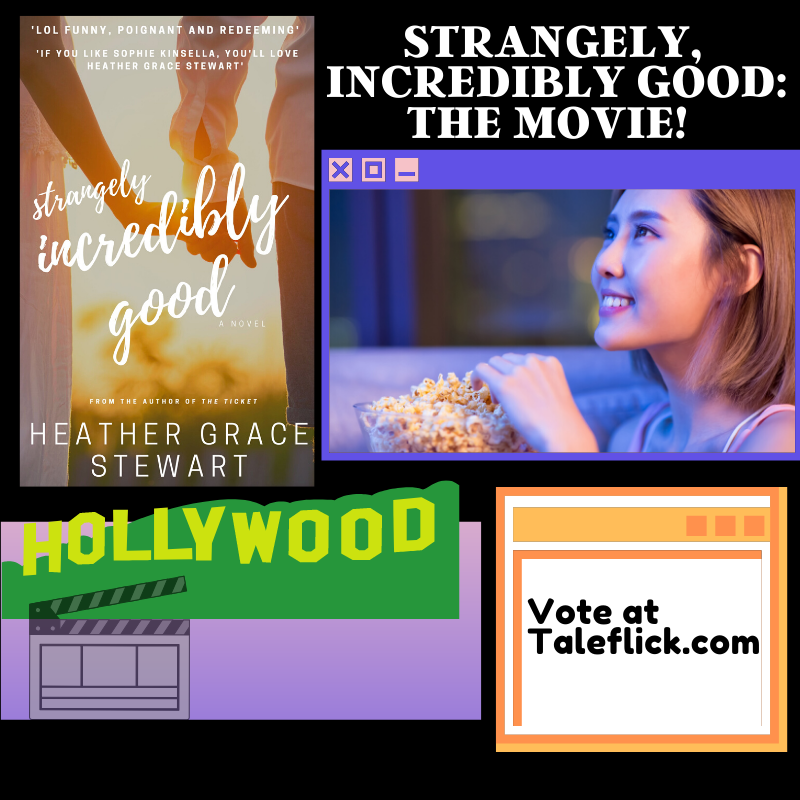
Strangely, Incredibly Good Book to Movie in the TALE FLICK DISCOVERY COMPETITION
It’s a finalist! You can help make this book a movie. Please vote at http://taleflick.com

Strangely, Incredibly Good is a finalist in the Tale Flick Discovery Contest, where producers search for the book they want to turn into a movie. The winning author will win a chance to meet with producers to discuss their book being optioned as a movie. Even if Strangely, Incredibly Good doesn’t win that chance, it will gain lots of visibility in the industry with the help of your votes.

Please vote for the book to become a movie here on January 22, 2020. Voting starts 10 a.m. Pacific/ 1 p.m. EST and runs until 4 pm. Pacific on January the 24th, 2020. You can vote once. Tag a friend in these comments or tag them on my social media posts (my Instagram, my Facebook, or my Twitter or YouTube channel) and share my social media posts wherever you can. Every person who votes and tags someone will be entered in my draw – you get bonus entries for tagging/sharing! The draw is for signed copies of Strangely, Incredibly Good and Remarkably Great AND a direct message chat (or email interaction if you prefer) with me once I start learning about the optioning process, which I will share with you in our chat. If the book does end up becoming a movie, the winner of this draw will be the first fan to get a video chat live from the set (if possible) and some fun movie swag (t-shirts, hats etc.)! This fun draw will take place on January 29th, 2020.

Tale Flick is a company that describes itself as “bridging the literary world with the Film & TV realm.” Their unique online marketplace brings together the different parties that help turn written stories into Film/TV shows.

Strangely, Incredibly Good was one of 40 stories chosen from their database to take place in this book to film Discovery Competition.

More details on why this is important to me and how the contest works. #TaleFlickDiscovery #booktofilm #strangelyincrediblygood #canadianauthors #makingmovies

How I Curbed My Cellphone Addiction

I’m Heather, a novelist, mother, and one-time cell phone addict. The addiction lead to wrist pain and mild depression. Here’s how I snapped out of it, and how you can, too.

It’s not easy to admit this, but for two years, I was addicted to checking my cell phone for new texts or social media posts almost every half hour.

It turns out I’m not alone in this addiction. According to the latest International Data Corporation (IDC) data, 79% of adult smartphone users have their phones with them for 22 hours a day, and 80% of users check their phones within 15 minutes of waking up every day.

My reasons for falling into the addiction were simple. I work from home, and had my phone in front of me at my computer between 8:30 a.m. and 5:30 p.m. in case I got an urgent text or call from my teenage daughter or husband, or a family member in need.

As a novelist I have a set writing schedule. I usually write in the morning for four hours. I work with short breaks, getting up every now and then to stretch or pour myself a coffee. Since I manage to get books written and published on time and market them, and have done so for five years, I didn’t think I was the type to get addicted to social media, or at least, the act of checking social media for any new activity. Since I got my new phone in 2016, I have spent about a half hour every evening interacting on social media, and I was happy with that limit.

I didn’t realize I was going over that limit. A washroom break would lead to fifteen minutes on the phone. A quick check to see if “anything interesting” was happening with my friends on Twitter became a half hour trapped inside the Twittersphere. I would joke about cooking dinner while on Twitter — and burning it. My kid and husband were happy, and I was a successful author. I was managing to balance everything just fine. I didn’t think it was interfering with my life in a negative way.

It wasn’t until Apple introduced their new Screen Time feature in iOS 12 in the fall of 2018, and then Instagram added it to their app in 2019 that I started using the features and realizing just how many hours I spent on my phone.

It wasn’t until Apple introduced their new Screen Time feature in iOS 12 in the fall of 2018, and then Instagram added Your Activity to their app in 2019 that I started using the features and realizing just how many hours I spent on my phone. My phone screen time each day was four to five hours, and at my height of trying to gain new readers on Instagram, I was using Instagram for an hour a day!

Before I go into why I didn’t want to spend that much time on social media, let me say that I enjoy social media for both work and play. I have come to love many people I’ve met online; some have even become friends I’ve met in real life.

However, being on social media can be draining. It’s like being in a bar; sure, you can meet some cool new friends, but you also can’t control who’s going to come up to you, spill a drink on you and say something nasty. There’s also the whole “Look At My Amazing Life’ aspect of social media. To each their own, but after 10 years using social media for both work and pleasure, I’m moving into the phase of Living My Amazing Life instead of posting about it. I’m still using social media, but I’m vigilant about how I’m using it. I told a friend the other day that I try to make sure my posts educate, entertain or inspire. If what I’m about to post doesn’t do one of those three things, I stop posting.

When I think back to when I was at my happiest in life, it was when I was climbing the pine tree at the back of our cottage to spend time alone up in my tree fort. I’d chew Hubba Bubba gum and read Archie comics and write stories and poems. I’d look out at the lake and commune with nature. I then climbed down and went for a swim with my sister, or had a great conversation with my parents. I was most happy at about eleven years old, when cell phones didn’t exist.

IMG_1698

There are so many trees to climb! ~Author Heather Grace Stewart

In early March while on vacation, I caught myself checking my phone several times in an hour, and I just got fed up with myself. Why couldn’t I focus on the moment I was living right then — a special family time — instead of what other people were doing? I wanted to find a way to feel eleven again, and I had a feeling it was just within my reach. I knew that if I wanted something to change, I had to make a drastic change. I unplugged from social media by taking every single social media app off my phone. When we got home, I started putting the phone in its charger in the kitchen, where I could still hear it if it rang, instead of in front of me at my desk.

On day one, I kept a journal of how I was feeling. It made me sick to my stomach to learn I was wanting to check my phone. I felt out of the loop. I felt disconnected. I felt angry that not using social media made me feel that way.

By the end of day two, however, I was feeling a sense of relief. I couldn’t believe how much more free time I had! By the end of March, I had finished my fifth novel and sent it to my agent.

After a month of using social media only on my desktop and only at a specific time each afternoon, I began to realize which app I loved the most (as Marie Kondo says, does it spark joy?) and decided to put Instagram back on my phone, but I allowed myself only 15 minutes a day with their Your Activity feature. My phone Screen Time is now down to 30 minutes a day, but that includes texting and calls and email for my work.

The change was like a light switched on in my life; one I hadn’t even realized had been off.

The change was like a light switched on in my life; one I hadn’t even realized had been off. It did take a few weeks, but I noticed that good friends began texting me or even (gasp!) calling more to catch up, instead of hearting my posts on Facebook, Twitter or Instagram. I had so much more free time, I was able to take up hot yoga, and that in itself has been life-altering. I’m spending more time cooking and enjoying it; I’m going for walks and spending quiet time just watching the birds in the new feeder in our backyard. I never bring my phone to the breakfast or dinner table anymore. My husband and daughter don’t either. The other night, we shared a big bag of Hubba Bubba gum while watching AGT together and pausing the show to tell each other stories. Then my husband pointed out we had a visitor, and together, we watched a skunk dig for grubs for fifteen minutes in our yard. We marveled at his technique and worried where our old cat was at the time. We put bets on whether he’d get skunked or not (he didn’t — he was happily asleep on a comfy chair on our front porch). To me, that time together was more interesting and weirdly bonding than anything I’ve seen on social media this year.

I still check the desktop versions of a few social media apps once every 24 hours for business purposes, but there’s no “crazy itch” to do so. It can wait.

I have so many trees to climb.

Three Simple (and Surprisingly Cheap) Ways to Promote Your Book

If you’re an indie author, chances are you spent most of your budget on your proofreader, editor, cover designer and maybe a branding expert. So, if funds are low, how are you going to afford to promote your book?

Have no fear, cheap ways are here, and I’ve tried them all.

I used these techniques and found within six months of trying them all that my monthly income had increased by 300 percent. They all took very little time to set up, and were worth the investment, because they brought me a profit. Before you try any of these, though, I caution you that they will only work if you had your book properly edited by a professional, your cover is eye-catching and designed by someone who recently took a course (cover trends change yearly!) and if you have a website, a Twitter account, and a Facebook Author page set up. Once you’ve done that, you can implement these techniques.

1. Tweet about your book. Use Booklinker.net to set up a universal link to Amazon, so that no matter what country your potential customer is from, it will lead them directly to their Amazon store. You can also add beautiful promotional photos to your tweet with using Canva.com

2. Ask any followers on Facebook, Twitter and Instagram to send you photos of themselves with your book. You can offer them a free copy of your next book, or if you aren’t sure when that’s going to happen, a complimentary second copy for their friend. Then post them on your most followed form of social media. Readers love interacting with authors, and this gives you lots of great, free photos to share around the web. You might want to set up a special folder in Pinterest just for these photos. You can integrate this idea with a Rafflecopter (Rafflecopter.com) which engages your Facebook and Twitter followers and gets you new readers to sign up for your mailing list. Mine was the most expensive technique on this list, but I got over 200 new and engaged subscribers in a few weeks.

3. Set up a Kindle Countdown Deal or Free Book Deal and then do a paid promotion to announce the deal via Bargain Booksy or its sister company Freebooksy for your first deal day, and for later days in the deal, Book Sends, Fussy Librarian or, for those in the UK, Book Hippo, which is free!  I know, it seems wrong to put the book you spent so much time writing down to 0.99 or even free. I fought against the concept for months, but when I finally did a free book deal for my first book, and then advertised that it was free using Freebooksy, I made back all the money I’d spent having my second book professionally edited. You do need to spend some money in this business to make money. Once you leap and give it a try (baby steps at first, don’t break the bank!) you’ll be amazed at the results. You’ll have a higher ranking in the Amazon charts for a while, so more readers will learn about your book, buy it, sign up for your mailing list (especially if you’ve mentioned the mailing list at the end of your first and second book) and more reviews, which will result in even more sales. It takes time to build momentum, but it does all work like dominoes once you promote your first book for a low price, or free.

You needn’t put your book in Kindle Unlimited (exclusive to Kindle) just to get it free – there are ways around that so that you can put your books on Kobo, iBooks etc. – and everyone writes about this  (price matching) so I won’t cover it here because it’s a long drawn out process. I am exclusive to Kindle and it’s working very well for me, but you can still put your book to $0 for a few months via price matching, and see if that results in more reviews and sales of your other books.

It’s all an experiment, and the industry is changing every month, and so I would suggest that you spend very little on these simple ideas and on any paid promotions at first, but do dip your toes in the water, and gauge how they perform for you over time.  Then, if you’ve found success, use part of your profits to advertise some more.

Good luck, and don’t forget to keep on writing! Even just 50 words a day is better than nothing.

Heather


On “Going Commercial” – And Loving It.

I’ve just been invited by Amazon Canada to be an Amazon Influencer. This means that I get my own website at Amazon.ca to display all of my books (finally!) and I can recommend products to you there as well. As one reader put it, “You’re going commercial?”

You bet I am, but I’m not doing anything differently with my online presence than I have been for many years. It’s just that a large corporation finally noticed that what I have to say (of my own volition) to my followers may be useful to them. If that’s what some call “going commercial,” I say bring it on, bring it big or go home broke. I’m not doing anything I’m not proud of; in fact, I’m really excited about this, because I’d already been plugging books and products in my Instagram/ on Twitter and YouTube for two years without even realizing it. Now I’ll just be earning a small percentage per purchase when I point readers to books and products that I already use and love.

I’ve always been a writer for the love of writing, and if I can find ways to do what I’m passionate about every day, stick to my morals, and still make a decent living in the 21st century as an author? Then “going commercial” is something I’m darn proud of.

The best part is, this is one more way that I can prove to those of you who aspire to become authors that, yes, Virginia, we CAN be wealthy writers! Very few can make a living that will sustain a whole family simply by writing books (especially if you don’t have over ten published books out yet). We can, however, make a decent salary for ourselves as writers if we think outside the box and do more than just write books. We have to consider selling those books as ebooks, paperbacks, audiobooks; selling the rights to adapt those books into films; speak about our lives as writers and get paid for that, and use social media to gain more interested readers, which gives us leverage in making business deals with corporations and organizations that we respect.

I started out as a poet, first published at age five, and decided to become a writer then and there. At the time, I didn’t realize I was headed into a profession that would pay me very little (even as a trained journalist) for coming up with fresh ideas and stories out of thin air. It didn’t make sense to me: why are writers so undervalued, when people who catch footballs and run with them earn $5-20M a year?

Reality sunk in quite quickly in my twenties when I began sending out story ideas to magazines and learned I’d be paid two to forty cents a word for my work ($1/word for the top magazines) and that the average author in Canada makes $6,000 a year. For some crazy reason, though, I kept on writing. I think the reason is called passion.

I’ve since made it my mission to be transparent with followers who tell me that they want to be authors, too. I try to remind you that it’s going to be challenging, but not impossible, to make a living doing this. I only started making a good profit at writing fiction two years ago. It started out as what I called “skate money” to buy my daughter skates, but soon my earnings became “vacation money,” and I was able to buy a $500 daybed for our backyard, several lovely vacations for our family and I paid many bills (or as my husband Bill likes to joke about it, “Pay Bill.”). While my book income continues to grow, I wouldn’t be able to handle the mortgage payments on my own, plus saving for University for our daughter, plus all of our yearly expenses, without the help of my spouse’s income. I can’t sustain my family in 2018 on my author earnings. Yet.

And that’s why I’m going commercial. Plus, I love online shopping. I love avoiding traffic and crowds and shopping in my luxurious grey robe. Now, when I’m not writing my next novel or working on getting the last one adapted into a movie, I get to buy dresses, purses and shoes and tell you what I think about them? Yes, please!

Check out my new Amazon Influencer Link and please use it whenever you want to buy one of my books or audio books. It will be much appreciated.

Thanks for taking this journey with me,
Heather

Heather Grace Stewart
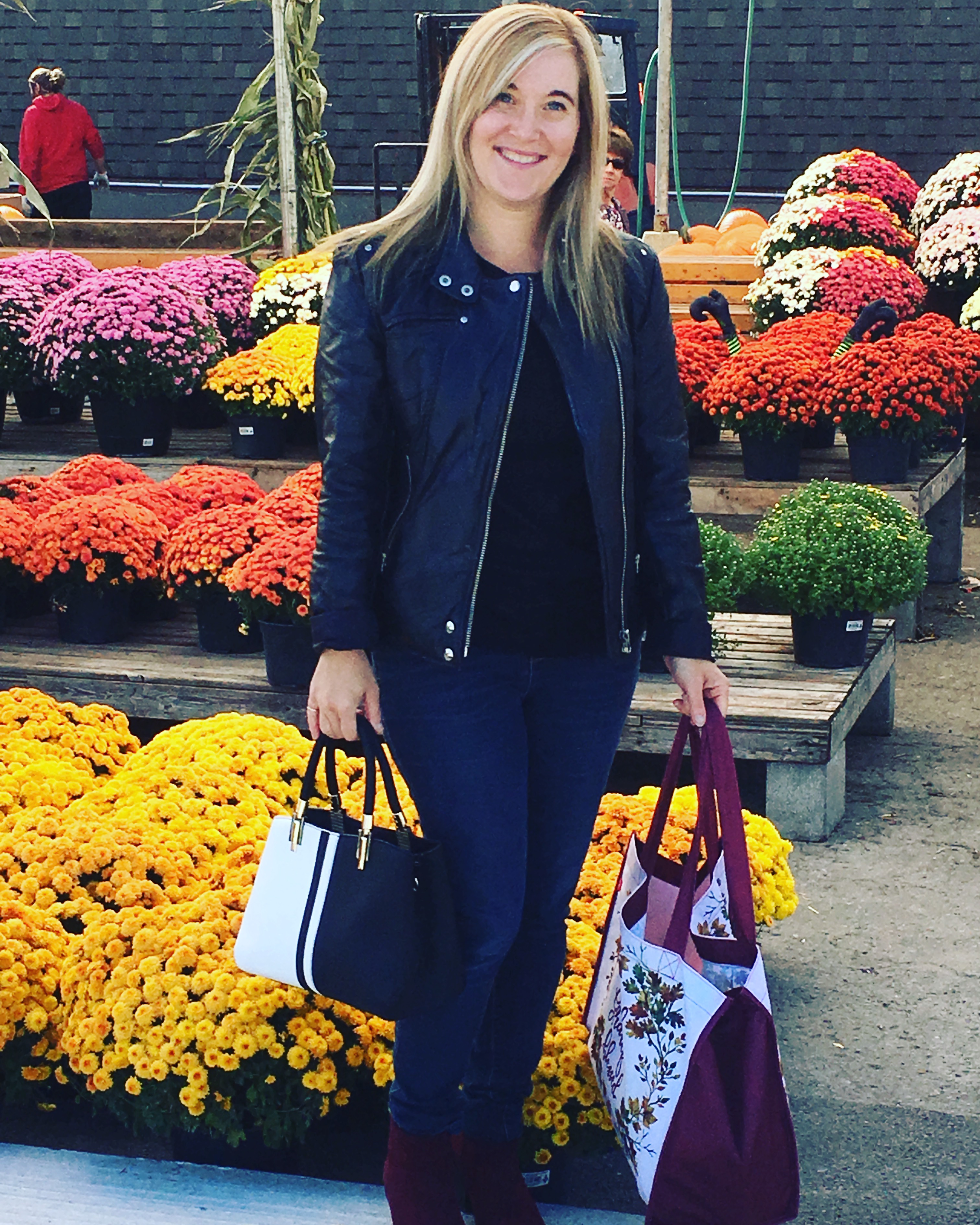
Shopping online is my second favourite way of doing it. I most love shopping at outdoor markets, buying flowers and hand-crafted decorations for our home.

Back To You

Hey.

I know it’s been a while. I hope you still remember my name.

I’ve been a terrible blogger for the last few years. It’s been challenging to find time to write my novels, market my novels, teach others how to do that via YouTube and social media, and spend time with my family. Blogging had to be left behind.

But blogging poems and blogging about writing are how I got pulled away from journalism and onto this career path back in 2007. I started this blog as “Where the Butterflies Go,” you all commented on my poetry, encouraged me to turn the posts into a book, and … […]<<< a whole lot of stuff happened! and here I am today, a published author, with four novels, five poetry books, a screenplay book and a kids’ book of poems under her belt. I never could have imagined I’d still be doing this more than a decade later.

I don’t think I’d be here if I hadn’t started that blog and had such great feedback from you readers. Thank you.

I miss that interaction, don’t you? Social media certainly makes it easier to comment (no logging in…I’ll see what I can do about that btw) but you don’t always have the same “clan” coming back. I miss my bloggyland tribe.

I’ve learned so much since my first novel was published. Here are a few of those lessons:

1) Take risks. If you don’t risk, you don’t grow. I know it’s scary, especially for so many of us introverted artist types (surprise, yes, I’m in fact an introvert who had to come out of her shell through drama as a teenager when she realized that’s how artists grow). I have had such an interesting life because of a few brave moments.

2) You have to put yourself out there as an author. No one else, not even your publicist, knows your product like you do. You have to go to the book signings and the speaking engagements, tweet about stuff that really matters to you, and risk looking like a fool (see #1) if you want the right readers to find you. In time, many of those readers will become your friends. Cool right? It’s not all about making money…but…

3) You have to spend money to make money. I didn’t like this one very much. You mean you have to spend money to advertise that your heart and soul of a book is FREE for a few days? Yes, you do. You don’t have to do that until the end of time. Just until you gain a reader base. It sounds wrong, but it’s right. I didn’t start making a profit as an author until I started spending money directing traffic to my books.

4) Give back. I feel this one strongly. I like to encourage and teach aspiring authors, because I remember how maddening it can be to feel like you’re getting absolutely nowhere. I still have those days, trust me, but that’s because I’m trying new things every day (audiobooks, TV deals) so I’m still learning what works and what doesn’t work. There are tens of thousands of new authors out there who are struggling to find their audience in this ever-changing book industry. I just want to encourage them before they decide to call it quits. Speaking of calling it quits…

5) Don’t quit. Success if probably just around the corner, or at least the corner after that. Keep on going, dreaming, risking, believing. Don’t put a second mortgage on your home, mind you, please be smart about it, but do everything you can to get your book seen. You have to keep on going, especially if you have a strong “knowing” about it. If you know it’s supposed to be, it will be. It’s just a matter of time.

I’m so happy to be back. I’ll try to do this weekly!

Heather 🙂