“Wealthy Writer” –isn’t that an oxymoron? Bestselling Amazon author and working writer of 22 years Heather Grace Stewart doesn’t think so!
Hey guys. I’m here to teach you how to use discipline and creativity to become a paid writer, and hopefully with some hard work and training, a wealthy one. Subscribe to this site, and/or to my YouTube channel so you don’t miss my weekly tips.
This week’s lesson is how you can get more writing done by telling your inner and outer critics, your past and present monsters, to Fork Off!
Share this! REALLY, it's ok! :) And don't forget to sign up on the landing page to join the HGS BookClub.
The expression “writers write,” is an old one, and I think it’s time that we did away with it.
Sure, writers have to write something every day if they’re ever going to get their first novel finished. However, if they want to succeed in the 21st century, they’re also going to have to market their work every day, take courses to improve their craft and marketing skills, network with other professional writers, and interact with their readers.
Sound like work? It is. “But I just want to write,” you say. So did I, five years ago.
In 2012, I worked as a freelance writer and editor for national magazines. I penned my poetry collections in the early mornings, before I got to work on paid writing contracts. I had already self-published two collections by 2012. A traditional publisher accepted my manuscript for Carry On Dancing, and I thought I was set for life. Okay, not for life, but I was traditionally published! I was going to start making a profit on my writing, after years of submitting work and being rejected! I was going to be sent on wondrous reading tours around Canada and maybe even the US. Because: I was published!
Yeah, right.
Now, to be fair, my publisher was awesome and worked hard. Those dreams didn’t happen for me right away, because I didn’t yet understand the amount of work (and advertising dollars) that goes into being a profitable author.
I spent hours a day trying to get my name out there, as did my publisher. I toured a few cities in Ontario, using profits from my freelance editing and writing jobs, and some grants I earned from The League of Canadian Poets and The Writers Union of Canada (TWUC). I blogged and Facebooked my way into a fan base of about 200 regular readers. For all this, I earned about $60 in royalties three months after the book’s launch. I was pleased with this, because I was still holding down other writing and editing jobs, and making some wine and shoe money with my poetry. I even started selling the one-time reprint and audio rights of my poems to internationally-distributed textbooks.
Fast forward to 2014, when a publisher accepted my manuscript for Strangely, Incredibly Good. The publisher was fantastic, and worked hard alongside me to publicize the book. The greatest lesson for me that year was that I lost some time and money marketing the book to Chapters-Indigo stores in Quebec and Ontario. I was published, but I wasn’t “she’s a big name,” “she’s going to sell like hot cakes” published, so the stores didn’t put my book on their shelves, only took my books by consignment, and took 45 % of the profit. I had a wonderful time meeting and greeting with readers, at a loss of about 0.50 a book. I was fully aware of that loss. I decided it would come out of my paid contract work. In my mind, my fiction writing was still a hobby, and I was getting my name out there with these appearances. It felt a little counter-productive sometimes, but I kept reminding myself that as long as I was having fun, I should keep on going.
Persistence paid off. By 2015, the year I decided to self-publish Remarkably Great, the sequel to Strangely, Incredibly Good, I wasn’t taking a loss with my appearances anymore, and my local Chapters actually offered to put several of my books on their shelves. I started seeing more money from my fiction trickle in, but certainly not what I’d call a living. I told the students I spoke to at my alma mater, Queen’s University: “Writing can’t always make you a great living, but it can make you a great life.” I was enjoying the life my writing had made – never a dull moment – and I kept at it for the sheer joy of the craft.
Author Heather Grace Stewart, right, with Queen’s University students after speaking at their Journalism Conference
My background should demonstrate how many years of zero profit or even a loss you may have to endure before you start making money with your fiction writing. The J.K. Rowling stories are rare. They exist, and I don’t want to dissuade you from reaching for the stars, but they are certainly not the norm.
In early 2016, after much contemplation and research, I made a few changes to how I was selling my work. I took back all the rights to all my work, so that I was the sole publisher. I wanted control of all my work and its marketing, and I wanted to organize my accounting in one place, not several.
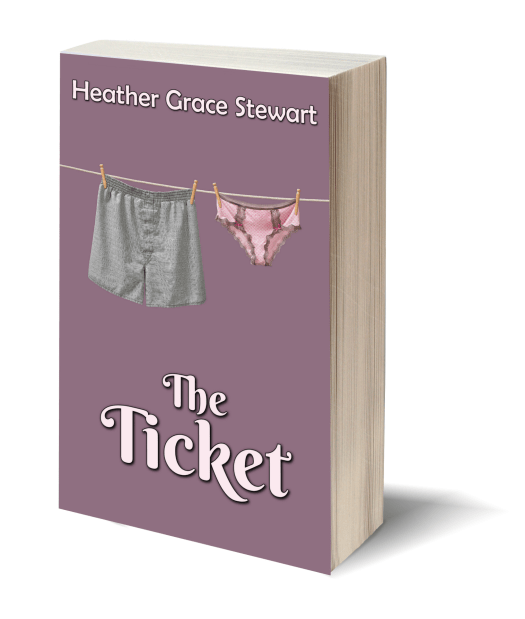
Once I had the rights back, I was able to control everything from pricing to discount sales to advertising. I was also finally able to put my first novel in the Kindle Unlimited Library along with Remarkably Great and my new novel, The Ticket.
Kindle Unlimited, used properly, is one of the best author tools since the typewriter. I started making a steady profit by early February 2016. I remember pretty much freaking out that I was now making $60.00 a month on Kindle sales alone, because I had been making $60 every three months. I wrote a blog Keep Your Day Job (But keep the faith) about how I was finally able to use my Kindle royalties – money earned from fiction alone – to buy my daughter a pair of skates.
Over a year later, I’m thrilled to say I could buy everyone in my daughter’s class skates every month with my ebook royalties, and then some. My monthly profits fluctuate, of course, and I haven’t begun to tabulate this year’s paperback profits, so I can’t tell you what I’ll be making this year, but it’s not just shoe money. It’s enough money to not have to think about finding freelance magazine writing contracts each month, or selling my poems to textbook companies to help pay the bills. (Although I still love to do those things).
What did I do differently? I took charge of my creations and my career by becoming an independent author. I kept writing every morning – because yes, writers do write. Then I started spending my afternoons investing in my writing career. I started a mailing list, improved my website, hired a designer for my book covers, and started advertising all of my novels – consistently, in places where readers always hang out. I also began doing more video appearances on my Facebook Author Page and tweeting on a more regular basis, with a more consistent approach.
In December 2016, I took a fantastic course called the Self Publishing Formula by Mark Dawson, and it changed the way I looked at my fiction writing. I had to stop thinking of it as a hobby if I wanted to make good money. It’s a business – a hard one to succeed in – but a business.
It took sixteen years of sending my work to publishers and agents, telling myself fiction couldn’t actually make me much money, before I drastically changed the way I approach my writing “hobby.” Now I’m finally making a daily profit with my fiction writing.
It’s 9:36 a.m. and I haven’t started writing for the day yet. I’ve been marketing my butt off since 7:30 a.m, and trying to help and encourage emerging authors with this blog post.
Because that’s what profitable writers do.
Share this! REALLY, it's ok! :) And don't forget to sign up on the landing page to join the HGS BookClub.
The draw to win a $25 Amazon Gift Card is April 25. Don’t forget you can enter to win (and sign up for all of my book bargain news & monthly Amazon gift card contests ) at this link:
Watch for me that day live on FB @ 4 EST when I announce the winner and answer questions /chat with whoever can make it out.
Sorry I can’t do my Q&A vids more regularly but I’m hard at work on a couple novels. I’ll let you know when I’m ready to do a live Q&A a few days in advance here on this blog, and on my Facebook Author Page.
And a final thank you to all of you readers who helped keep THE TICKET in the top 6,000 Kindle books on Amazon.com for these past few weeks – you’re simply amazing! Can we hit the top 1 K? Maybe even the Top 100? Please let others know about the book if you liked it, and don’t forget to write a one-line review on Amazon too – every little bit helps spread the word.
xx
Love and all good things,
Heather
Share this! REALLY, it's ok! :) And don't forget to sign up on the landing page to join the HGS BookClub.
Hey! This year, I’ve been doing weekly live Q&A videos Tuesdays at 2 on my Facebook Page, where you readers can interact and ask me questions (you can also throw out questions to me anytime on Twitter @hgracestewart and I’ll try to answer them within 24 hours). To help you narrow your questions to a topic, I’ve decided to offer mini-lectures whenever I can. Writing dialogue was my February 28th topic. You can watch the video (or videos, there are several archived at the top of the page) read the tips here, or both.
FIVE FAST TIPS FOR WRITING DIALOGUE
DON’T OVERTHINK IT. Just write, and let your thoughts flow. You can go back and edit later. The best dialogue is natural, not forced.
TALK IT OUT. Good dialogue reads like it would be spoken. So, after you have written at least a full page of dialogue, speak it out loud. You’ll find yourself editing lots once you realize just how many phrases don’t sound right when you speak them.
ACT IT OUT. Go on, no one is watching you, except maybe your pets. So, stand up and try to act out what you’ve written. Play both characters. Does your scene ring true to life? Does it flow naturally? The more you try acting out your dialogue, over time, the more you’ll find that writing dialogue becomes an easier task.
LOSE SOME WORDS, LOSE THE NAMES. When we speak to friends and family, we usually cut off a few words, like “went to the store,” instead of “I went to the store,” or if our spouse is calling us, we call back, “down in a sec!” instead of “I will be there in a second.” Watch for this in the sentences you write so you can stay as true to real life speech as possible. You should also lose NAMES as much as possible in your speech. People don’t use eachother’s names very often in real speech. Have you ever thought about that? We usually only use names when we’re feeling very angry, very loving, or when we need to get a person’s attention and not very often in between.
AVOID ACCENTS. Dialects and accents, when done as part of a character’s entire speech, are confusing to readers and often break the flow of reading. Don’t try to chop and change English words to make someone sound Australian or German. Very few writers can do this well. Instead, drop in an actual French or Scottish or Japanese —whichever language you are trying to achieve—word or two into that person’s speech and italicize it. Be sure you fact-check several times and get it right. This is where good, professional, paid editors are vital.
Author Heather Grace Stewart with her poetry anthology CAGED during her Feb. 28, 2017 Live Q&A on Facebook. Heather will see you Tuesdays at 2 EST to discuss writing techniques and answer your questions.
I have a lot of writing to get done for my next novel, so I’m going to take a break from the social networking/videos, but I promise that I’ll be back discussing “How to find and develop your idea” on Tuesday, March 21st. I’ll be there at 2 EST, and it will be archived on the page, so if you miss it live, you can still watch it later that day or that week. Of course, I’ll write a summary here for you, too.
Happy dialogue writing!
Love,
Heather
Share this! REALLY, it's ok! :) And don't forget to sign up on the landing page to join the HGS BookClub.
I’m happy to be back home with one of my best furry feline friends, Sam, 171/2. This photo was taken late last night after a long day flying home. My arms are sore 😉
Today, I’ve been writing down my main goals for the year, and at this point, I have some (potentially?) bad news. Not one of them is a new book. I always listen to my gut, and I just don’t feel that I have anything important to say in book form right now. I’ve been writing and plotting but nothing feels “just right” to move forward with yet.
I’ve said all that matters to me for now in CAGED, and in my three romantic comedy novels, and earlier, in my four poetry collections.
That said, I think that by now, you know I often surprise myself. I didn’t think I’d be publishing one book in 2016, let alone two!
This year, I want to focus on learning to market the works that I do have out, with the help of an indie publishing guru, Mark Dawson, with whom I’ve been training thanks to his Self Publishing Genius course – I highly recommend this course!
My novels are selling very well, but I wish more people knew about my poetry. I’m going to focus on improving my marketing skills this year, become a yoga practicing intermediate, and above all, spend more time with/writing to the old fashioned way! family and good friends.
Will I write? Of course I will. I just can’t set a timeline for when the sequel to The Ticket will be out – or even if there will be one.
It’s a blessing and a curse that I always write what I want – not what’s in demand 😉 I hope those of you who have been following me for a while will stick around and check in on me every now and then.
I do know something good is just around the corner. I’ll keep you posted.
Have a wonderful start to 2017! Be good to one another.
Love, Heather
xox
Share this! REALLY, it's ok! :) And don't forget to sign up on the landing page to join the HGS BookClub.





 Heather Grace Stewart